
Fertilizer Granulator Machine Price Influencing Factors: A Buyer‘s Guide to Getting the Best Deal
Why do two seemingly identical fertilizer granulator machines — one quoted at 3000 and the other at 30,000 — differ by ten times in price? The difference is not just about numbers on a quotation sheet. It’s about five hidden factors that determine how long your machine will run, how many tons of pellets it can produce per hour, and how much you will spend on repairs three years from now.
If you are shopping for a fertilizer granulator, this guide will break down exactly what drives the price up — and where you can get real value. By the end, you will never look at a quotation the same way again.
1. Understanding the Price Landscape: Where Does Your Machine Fit?
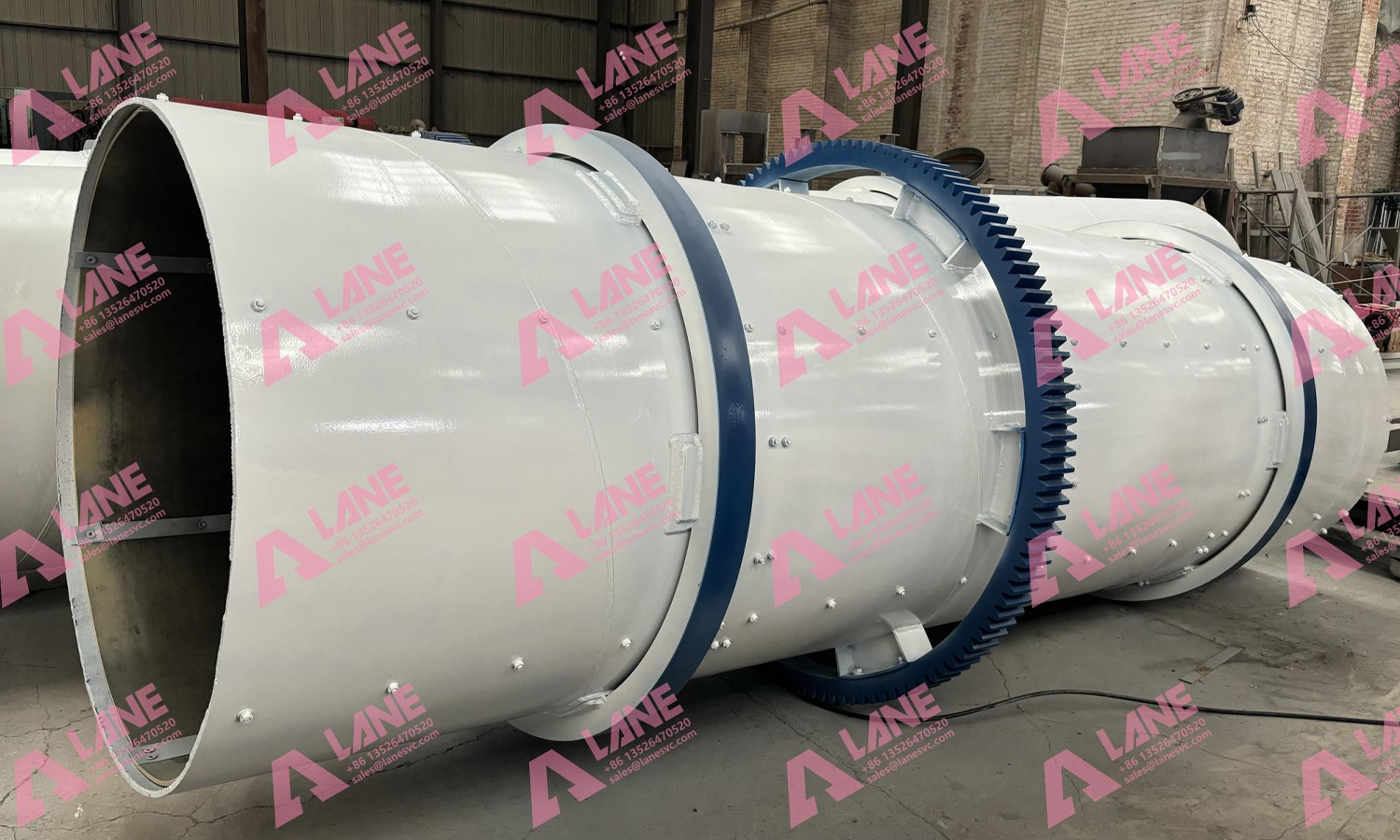
Fertilizer granulator machine price influencing factors begin with a simple truth: different technologies, different price tags. Disc (pan) granulators are generally the most budget-friendly option, especially for organic fertilizer startups. Rotary drum granulators require higher upfront investment primarily due to their size and auxiliary equipment requirements. Meanwhile, extrusion granulators offer mid-range pricing and excel at dry granulation without heating or drying.
Beyond technology type, how do you know which price bracket you should be looking at? The chart below gives you a quick reality check:
| Equipment Type | Small / Lab | Medium Production (1–3 t/h) | Large Industrial (4–12 t/h) |
| Disc/Pan Granulator | 800–800–3,000 | 3,500–3,500–8,000 | 8,000–8,000–25,000+ |
| Rotary Drum Granulator | 7,000–7,000–15,000 | 15,000–15,000–40,000 | 40,000–40,000–70,000+ |
| Double Roller Extrusion Granulator | 3,000–3,000–8,000 | 8,000–8,000–20,000 | 20,000–20,000–50,000+ |
But here is the crucial point: these ranges are just starting points. What really makes one machine more expensive than another comes down to five key factors.
2. Five Critical Fertilizer Granulator Machine Price Influencing Factors You Need to Know
Factor 1: Equipment Type and Granulation Principle
Each type of granulator serves different production needs — and comes with a corresponding price tag.
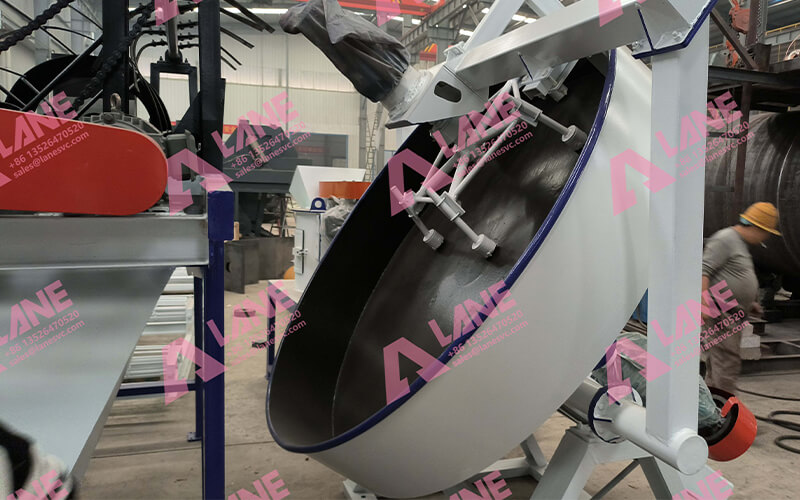
The disc granulator works by spinning material around so it rolls into round pellets. The design is pretty simple, it’s easy to run, and it works great for small to medium‑sized farms. You can get a granulation rate of 93% or more with it.
The rotary drum granulator uses a big spinning drum to stick materials together. It’s a beast for large‑scale production — think 20 to 80+ tons per hour — and the cost per ton is lower, but the pellets won’t be as uniform, usually around 70–85%.
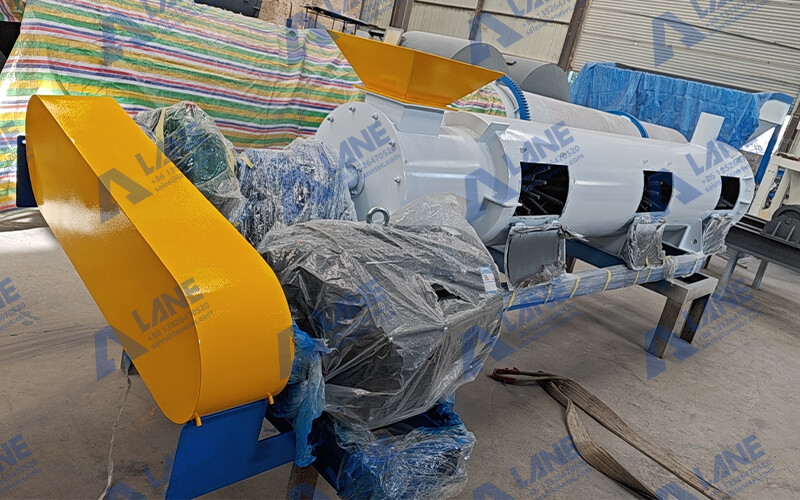
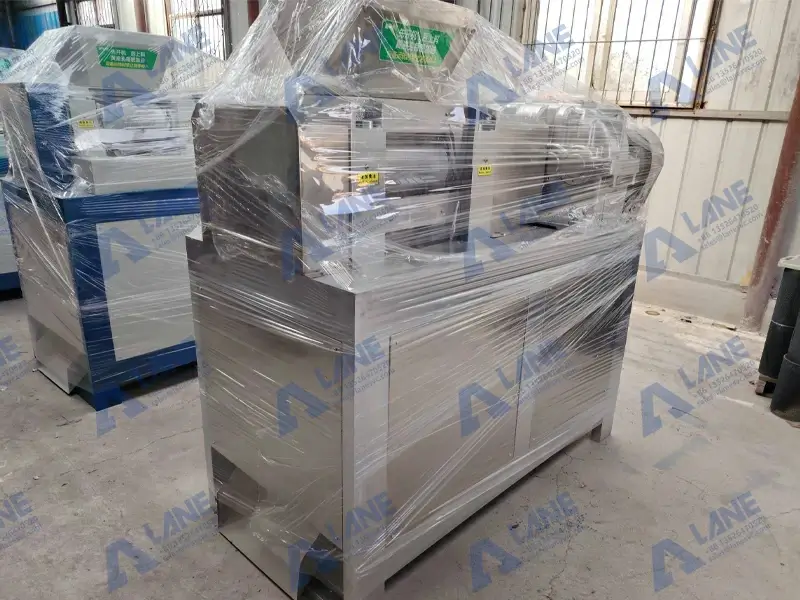
The double roller extrusion granulator takes dry powder and squeezes it straight into pellets. No drying, no cooling — so it uses less energy and is easier to maintain.
If you’re producing organic fertilizer on a small or medium scale (under 15 tons per hour), a disc granulator is usually your best, most cost‑effective option.
Factor 2: Construction Material — The Hidden Cost Driver
When comparing fertilizer granulator machine price influencing factors, disc material often accounts for the largest surprise. Two machines with the same capacity can differ by 20–40% in price solely because of what the disc is made of.
1. Common carbon steel (Carbon Steel): Base price, suitable for dry and non-corrosive materials, with a lifespan of approximately 3 to 5 years. It has the lowest operating cost but requires frequent replacement in the long run.
2. 304 Stainless Steel: The price increases by 20–40%, but the corrosion resistance is significantly enhanced. The service life of the disc body is extended from 3 years to over 8 years. The 304 stainless steel disc body structure can reduce the granulation cost from 28 yuan per ton to 19 yuan.
3. High-strength fiberglass reinforced plastic (FRP/PP) lining + radiation steel plate reinforcement: Combining the dual advantages of structure and corrosion resistance, the lining is replaceable, taking into account long-term cost-effectiveness. The bottom of the tank is reinforced with multiple radiation steel plates to ensure it never deforms.
Factor 3: Motor and Drive System — The Heartbeat
The motor and reducer are the core of the granulator’s power system, and their configuration directly affects whether the equipment can operate stably for a long time. Among the factors influencing the price of fertilizer granulators, this aspect is often the most crucial.
1.Low-end configuration (no-name / refurbished motors + rigid transmission): Large starting impact, high noise, frequent malfunctions within 1-2 years. Once damaged, spare parts are hard to find, and the entire machine is prematurely scrapped.
2.High-end configuration (national standard brand motor + flexible belt drive + high-frequency quenched gears): The reducer and motor adopt a flexible belt drive structure, which ensures smooth start-up and low impact force. The instantaneous impact load on the motor and reducer during start-up is significantly reduced. The main gears, after being treated with high-frequency quenching, double their service life. Under normal maintenance, the national standard brand motor can operate continuously for 8 to 10 years without major repairs.
Factor 4: Disc Depth and Baffle Design
The design of the disc directly affects the quality of granulation and the granulation rate, and it is a key link that determines the “soft power” of the equipment.
1.Shallow pan + no baffle (low specification): Limited material capacity, monotonous movement trajectory, particles discharged prematurely, small-sized and insufficiently strong finished products, requiring secondary screening and rework. The hardware cost is low, but the overall output efficiency is poor.
2.Deep pan + integral arc structure + replaceable wear-resistant baffle (professional grade): The deep pan is designed with an integral arc structure, ensuring uniform force distribution on the materials inside the pan, resulting in better sphericity and density consistency of the particles, with a granulation rate of over 93%. Three discharge ports are set on the pan edge, facilitating intermittent production operations, significantly reducing labor intensity and improving efficiency.
When installing, a heavy-duty base without anchor bolts can be selected, which not only ensures smooth operation but also reduces the installation cost.
Factor 5: Automation — From Manual to Smart
For customers with a medium or large scale, the long-term benefits brought by automation are more likely to be quickly realized and are worthy of investment in terms of real money. When evaluating the influencing factors of different fertilizer granulator prices, the automation configuration often serves as the dividing line between the “basic version” and the “professional version”.
1.Fully manual operation: The initial cost is the lowest, but there is significant variability in human operation, the efficiency is unstable, and it is highly dependent on the operators.
2.Variable Frequency Speed Control (VFD) + Automatic Feeding + Automatic Discharging: VFD achieves stepless speed regulation, meeting the speed requirements for different materials; the automatic feeding system ensures a constant feed rate; the automatic discharging system enables qualified particles to be automatically discharged while unqualified particles are returned to the disc to continue granulation, significantly reducing the loss of returned materials and enabling continuous automated operation.
Maybe you are wondering: “This all sounds good in theory, but can I actually find a supplier that delivers all of these features?”
A good way to see these factors in action is to look at how a real manufac
 turer addresses them. While many suppliers exist in the market, one that has integrated all five of the above factors into its standard offering is Henan LANE Heavy Industry Machinery Technology Co., Ltd.
3. Smart Buyer‘s Checklist: 5 Things You Must Do Before Ordering
Before you sign any contract, run through this checklist — it will save you more money than any bargaining ever could:
Ask for a complete spec sheet
Request detailed information on disc material, drive system, motor brand, and automation configuration. The supplier should provide this upfront without hesitation.
Request lab test data or trial videos
Verify the claimed granulation rate using your actual raw materials. A reputable manufacturer will have real equipment test data available (like LANE’s bentonite experiment results) or can run a remote test for you.
Check warranty and after-sales support
For overseas buyers, confirm whether remote training, engineer dispatch for installation, and replacement parts logistics are included. Some manufacturers offer up to 5-year warranty on core components.
Calculate total cost of ownership (TCO) not just the price tag The 2,000cheapermachinewithno−namecomponentsmaycostyou2,000cheapermachinewithno−namecomponentsmaycostyou8,000 in repairs and downtime over three years. The slightly more expensive machine with quality disc material, brand motor, and long warranty is usually the cheaper option in the long run.
Ask for customer references in your region
If the supplier claims to export to your country, ask for a reference you can contact. Real feedback from existing users is worth more than any brochure.
4. Conclusion: The Price Is Not the Price
One thing should be clear: the price of a fertilizer granulator machine is never just a number. It is a reflection of five fundamental factors — equipment type, construction material, motor and drive system, disc design, and automation. Cheaper upfront almost always means higher costs down the road.
Popular Posts

Compound Fertilizer Rotary Drum Granulator
Hot Solution

Organic Fertilizer Production Line
Hot Solution

NPK Fertilizer Production Line
Hot Solution

Compound Fertilizer Production Line
Hot Solution

Liquid Fertilizer Production Line
Hot Solution

Bio Organic Fertilizer Crawler Type Compost Turner
Hot Solution

Animal Manure Organic Fertilizer Mixing Granulator
Hot Solution

Animal Waste New type organic fertilizer Granulator
Hot Solution

Disc Granulator for Fertilizer Production
Hot Solution

NPK Fertilizer Double Roller Granulator
Hot Solution

Biomass Pellet Production Line
Hot Solution

Bentonite Cat Litter Production Line
Hot Solution


Wood Pellet Ring Die Granulator
Hot Solution
Leave a Messages