
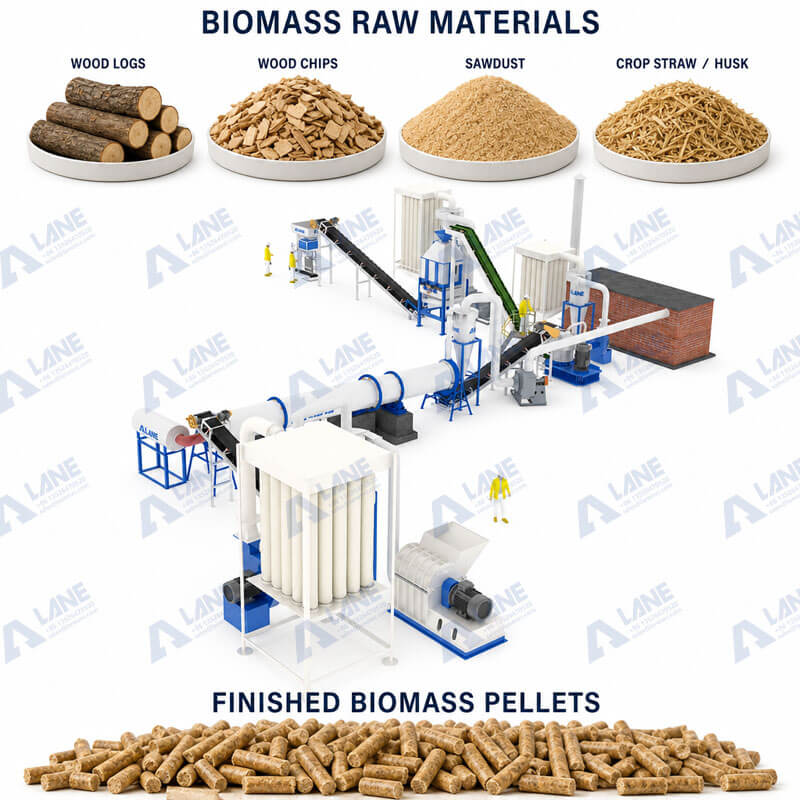
Composition of Biomass Pellet Production Line
The biomass pellet production line includes raw material hopper, belt conveyor, wood crusher, drum chipper, rotary dryer, ring die pellet mill, counterflow cooler, rotary screener and automatic packing machine.
We provide complete sets of equipment for biomass pellet production and customized production solutions according to customers’ raw materials, production capacity, pellet size and application requirements.
Application of Biomass Pellet Production Line
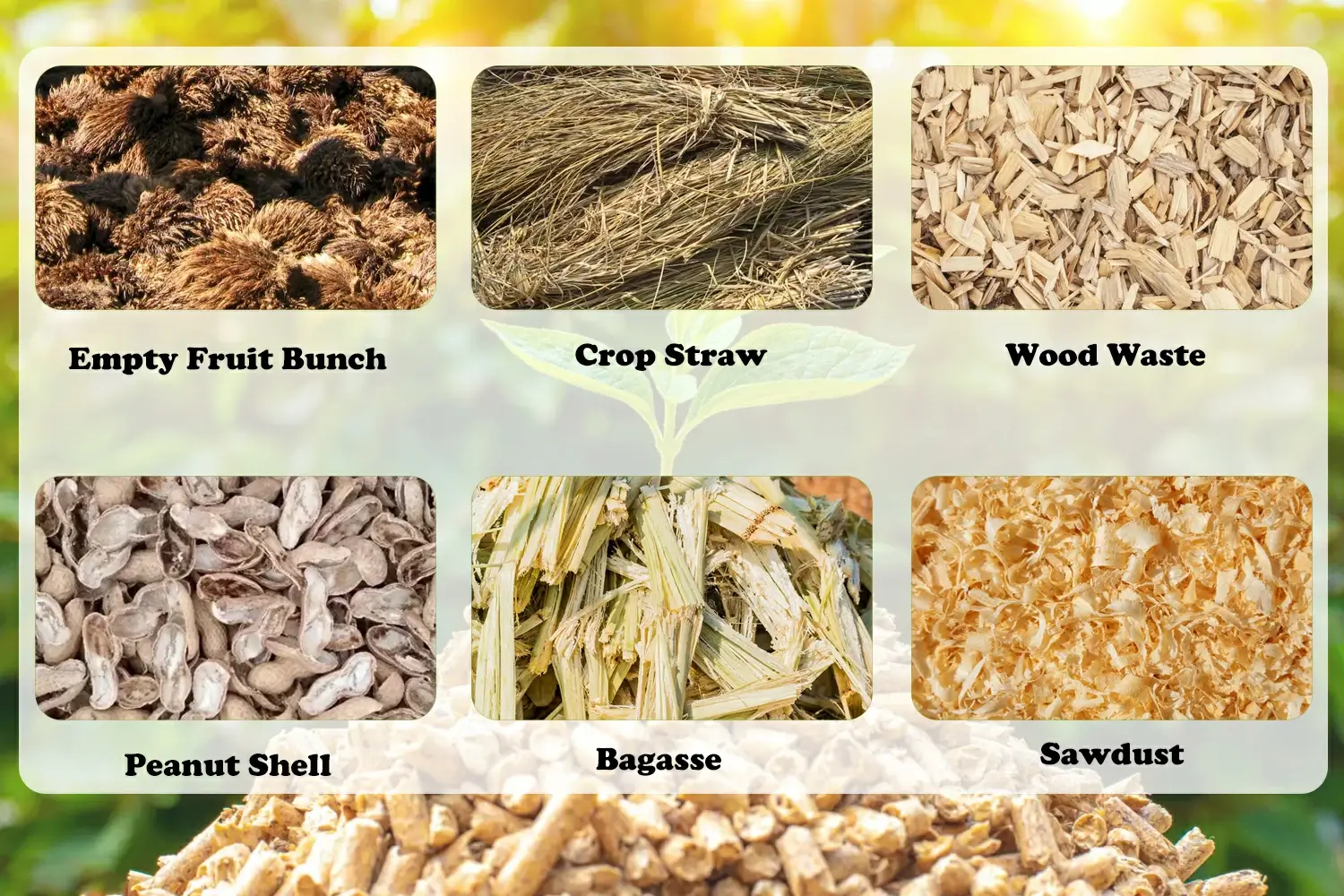
1. The biomass pellet production line has wide adaptability to raw materials, which can include sawdust, wood chips, rice husk, straw, corn stalks, wheat straw, peanut shells, palm fiber, empty fruit bunches (EFB), and other agricultural and forestry residues.
2. Biomass pellets are mainly used as solid biofuel for industrial boilers, biomass heating systems, power generation and other thermal applications. The pellet size and density can be adjusted according to the requirements of the end user.
3. The production line can process different types of biomass residues after appropriate crushing and moisture adjustment, turning loose agricultural and forestry waste into dense and easy-to-store biomass fuel pellets.
Advantages of Biomass Pellet Production Line
1. Wide Adaptability to Biomass Raw Materials
The production line can process various agricultural and forestry residues, including wood waste, crop straw, rice husk and palm processing residues.
2. High-Density Pellet Production
The pellet mill compresses prepared biomass materials under high pressure to form compact pellets that are convenient for storage, handling and transportation.
3. Adjustable Pellet Size
Different pellet diameters can be produced by selecting suitable die specifications according to the customer’s application requirements.
4. Stable Moisture Control
The drying system reduces excessive moisture in the raw materials and provides suitable feed conditions for pelletizing.
5. Continuous Production
The equipment can be configured for continuous material feeding, drying, pelletizing, cooling, screening and packing.
6. Reduced Raw Material Volume
Pelletizing significantly increases the bulk density of loose biomass residues, making the finished pellets easier to transport and store.
7. Flexible Production Capacity
The equipment configuration can be customized according to the raw material characteristics, required capacity, workshop conditions and final pellet specifications.
8. Complete Biomass Pellet Solution
From raw material preparation to finished pellet packaging, the complete production line provides an integrated solution for commercial biomass pellet production.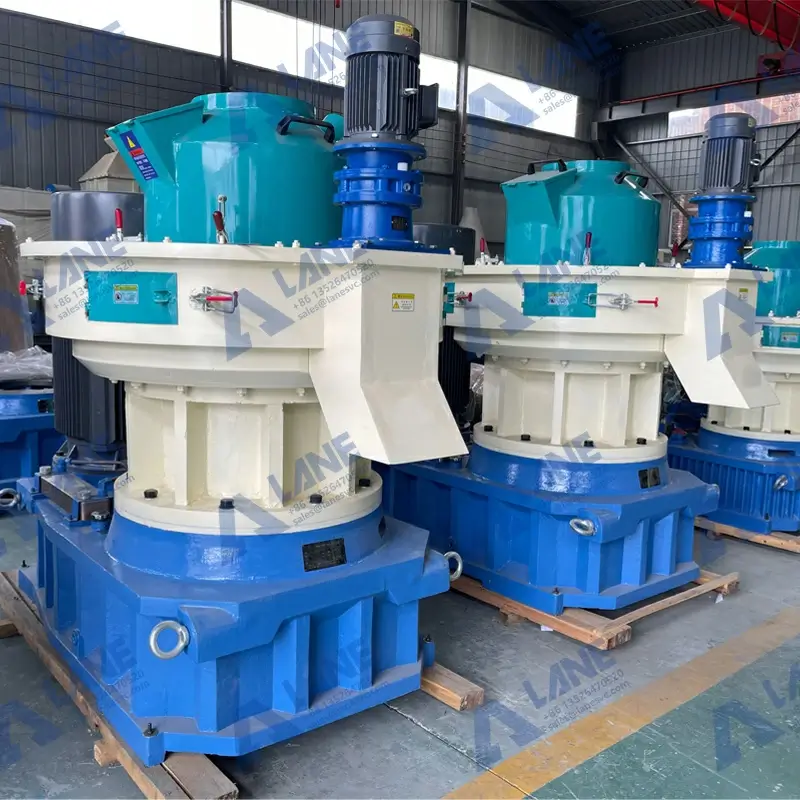
Process of Biomass Pellet Production Line
The biomass pellet production process mainly includes raw material preparation, crushing, drying, pelletizing, cooling, screening and packaging.
1. Raw Material Preparation
Biomass raw materials such as sawdust, wood chips, crop straw or palm residues are collected and transported to the raw material feeding section.
Large foreign materials and unsuitable materials should be removed before processing. Depending on the raw material, a feeding and conveying system can be configured to provide continuous and stable material supply.
2. Crushing Process
The biomass material enters the hammer mill or suitable biomass crusher.
Large wood chips, stalks and other coarse materials are crushed into smaller particles. Proper particle size helps improve material feeding and provides better conditions for subsequent drying and pelletizing.
3. Drying Process
The crushed biomass enters the rotary dryer when its moisture content is too high for pelletizing.
Hot air passes through the rotating drum while the biomass material is continuously lifted and dispersed. This increases contact between the material and hot air and reduces moisture to a suitable level for pellet production.
The required drying temperature and residence time depend on the raw material type, initial moisture content and production capacity.
4. Pelletizing Process
The dried and conditioned biomass is conveyed to the biomass pellet mill.
Under the combined action of pressure and friction, the biomass material is compressed through the die holes and continuously formed into cylindrical pellets.
The pellet diameter is determined by the selected die specification. The pellet mill can be selected according to the raw material characteristics and required production capacity.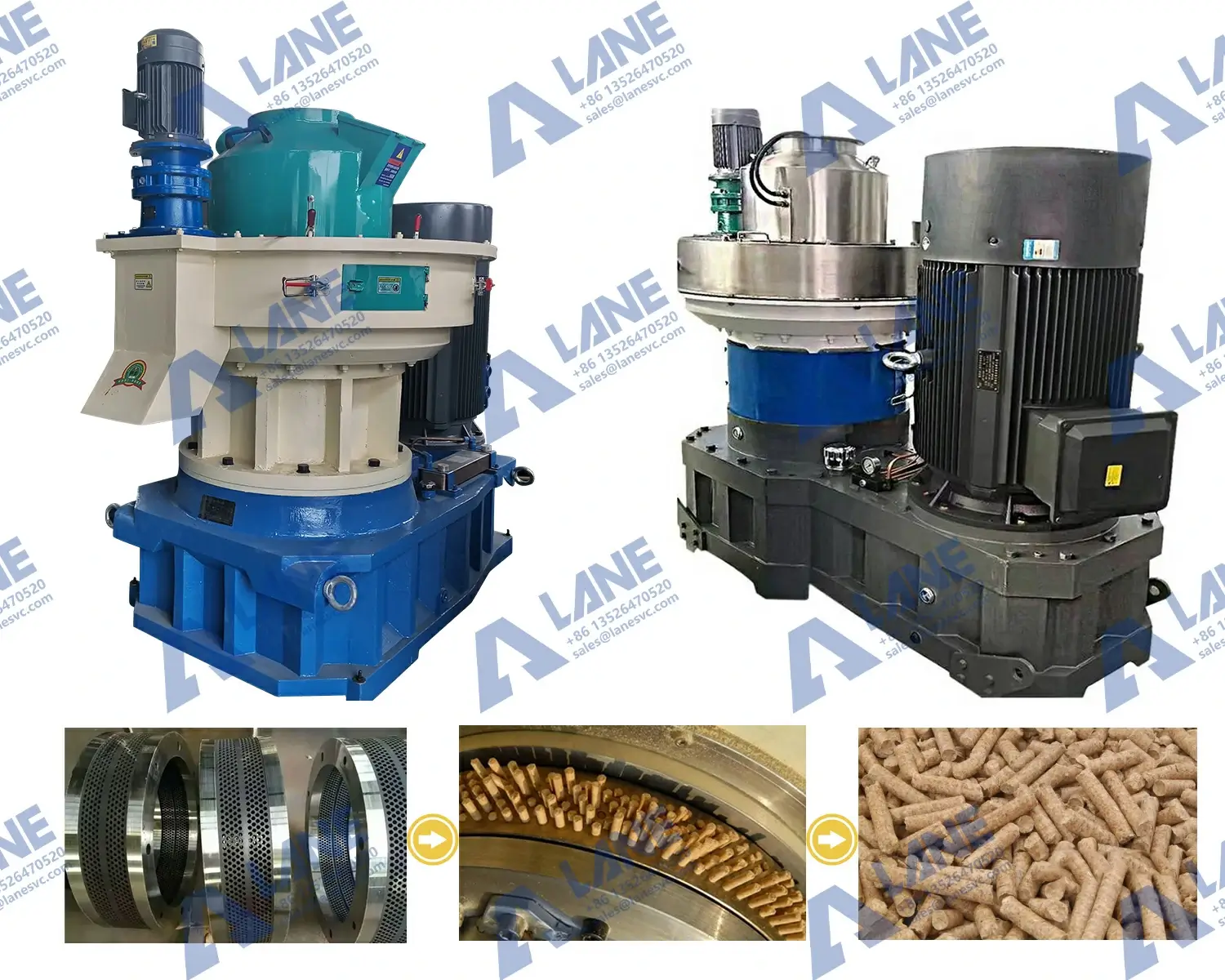
5. Cooling Process
Freshly produced biomass pellets have a relatively high temperature and may contain residual moisture.
The hot pellets are sent to the Counterflow Cooler, where ambient or conditioned air passes through the pellet layer to reduce their temperature and stabilize the finished pellets.
Cooling also helps prepare the pellets for subsequent screening and packaging.
6. Screening Process
After cooling, the biomass pellets enter the rotary screener.
The screening system separates qualified pellets from fines and oversized or irregular materials. The qualified pellets are sent to the packing system, while separated fines can be returned to the pelletizing process when appropriate.
7. Packing Process
The qualified biomass pellets are conveyed to the automatic packing machine.
The packing system can be configured for different bag sizes according to the customer’s sales and transportation requirements. After packing, the finished biomass pellets can be stored or transported for industrial and commercial use.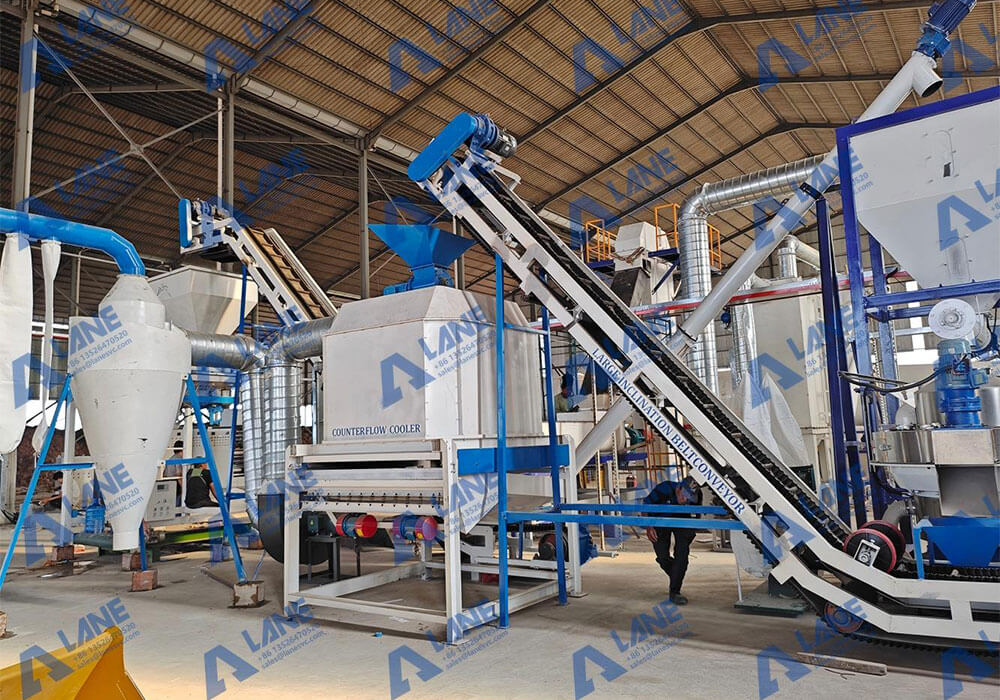
How to Produce Biomass Pellets from Agricultural and Forestry Waste?
The key to biomass pellet production is to properly control the particle size and moisture content of the raw material before pelletizing.
For materials such as sawdust and wood chips, the raw material may only require crushing and moisture adjustment before entering the pellet mill. For straw, EFB, palm fiber and other coarse agricultural residues, additional crushing or preparation may be required.
During pelletizing, the prepared biomass is continuously fed into the pellet mill. The rotating die and rollers compress the material under high pressure, forcing it through the die holes and forming dense cylindrical pellets.
For palm waste pellet production, materials such as EFB, palm fiber and other solid palm residues can be processed through crushing, drying and pelletizing. The actual process and equipment configuration should be determined according to the moisture content, fiber structure and required production capacity of the raw material.
If you are planning a biomass pellet production project, we can provide a complete equipment configuration according to your raw material, moisture content, production capacity, pellet diameter and final application.
Popular Posts

Compound Fertilizer Rotary Drum Granulator
Hot Solution

Organic Fertilizer Production Line
Hot Solution

NPK Fertilizer Production Line
Hot Solution

Compound Fertilizer Production Line
Hot Solution

Liquid Fertilizer Production Line
Hot Solution

Bio Organic Fertilizer Crawler Type Compost Turner
Hot Solution

Animal Manure Organic Fertilizer Mixing Granulator
Hot Solution

Animal Waste New type organic fertilizer Granulator
Hot Solution

Disc Granulator for Fertilizer Production
Hot Solution

NPK Fertilizer Double Roller Granulator
Hot Solution

Biomass Pellet Production Line
Hot Solution

Bentonite Cat Litter Production Line
Hot Solution


Wood Pellet Ring Die Granulator
Hot Solution
Leave a Messages